
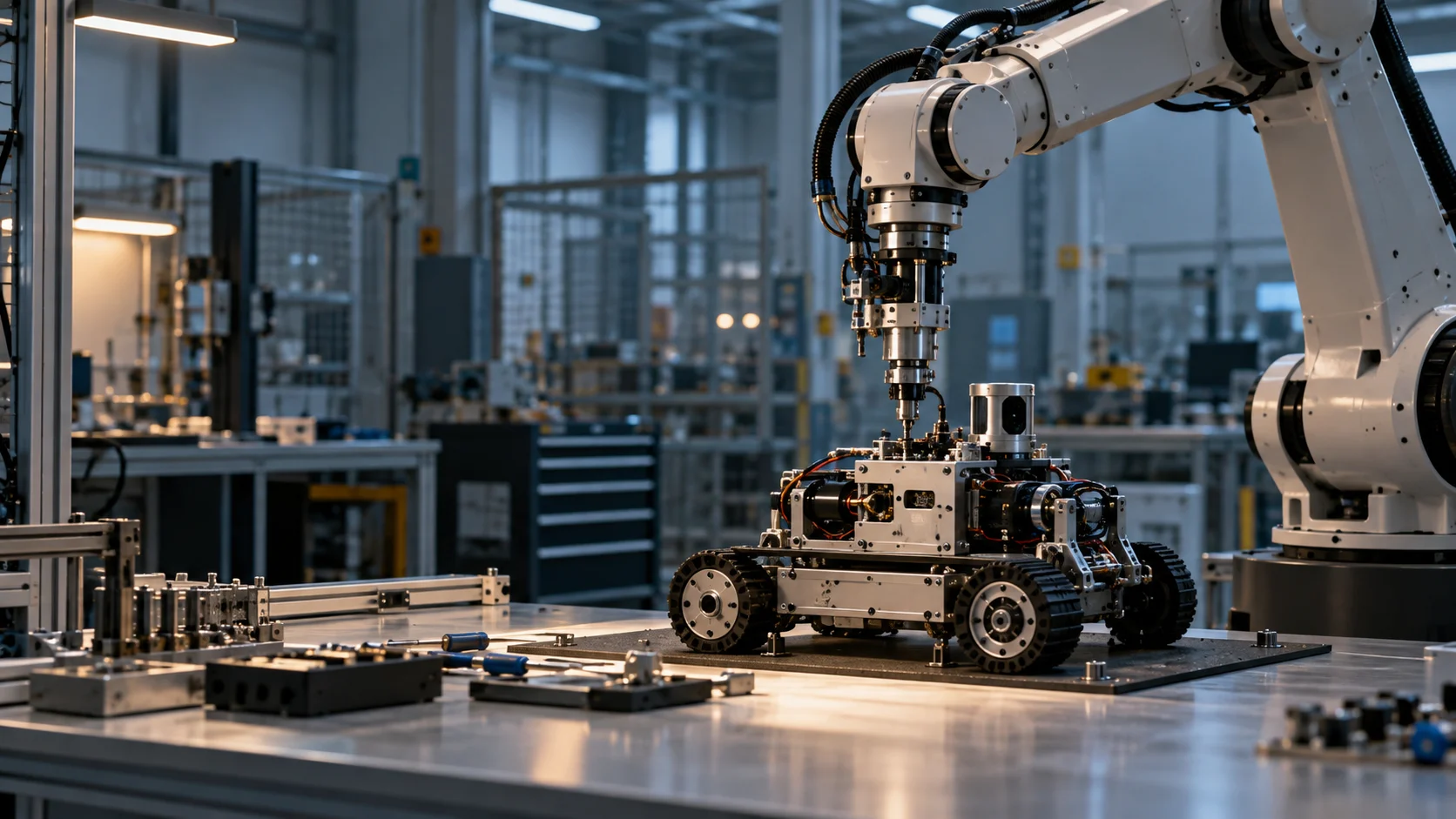
Making a copy is more than assembling the final pieces. A robot depends on motors, electronics, structures, tools, and energy. Each of those depends on other processes. Any serious path toward self-replication has to account for the work outside the frame.
Start by drawing the boundary.
A machine that assembles purchased parts has reproduced an assembly. It has not necessarily reproduced the capability that made those parts. Both can be valuable, but they are different achievements.
For Forge, the useful question is not just, “Can a robot build another robot?” It is, “Which steps can the system perform, what does it need from outside, and what can the resulting machine actually do?”
Then make the next dependency visible.
A sensible progression starts with a defined task. From there, a system could work toward assembling a machine, making selected components, and helping build the equipment required for another production cell.
Every step should make its dependencies explicit. Supplied materials, purchased electronics, human setup, and external inspection all count. Removing one dependency is progress; hiding it is not.
The long-term ambition is a factory that helps build another factory. That means connecting many processes into a reliable whole. It is a much larger engineering problem than a single robot performing a single impressive action.